The Ten-Minute Call: Inside the Prompt Corners That Hold Hackney’s Stages Together
Photo: stage manager prompt corner theatre backstage cue sheet dim lighting, via static1.thegamerimages.com
At 7.32pm on a Thursday, the prompt corner at a 90-seat room off Mare Street is already a small office, a first-aid post and a switchboard. There is a ring binder open at the show script, a cue sheet annotated in three colours, a mug going cold, and a monitor showing the stage from an angle the audience will never see. The stage manager is not sitting down. They are leaning into a radio, asking front of house whether the party of four in the bar knows that the doors are about to close.
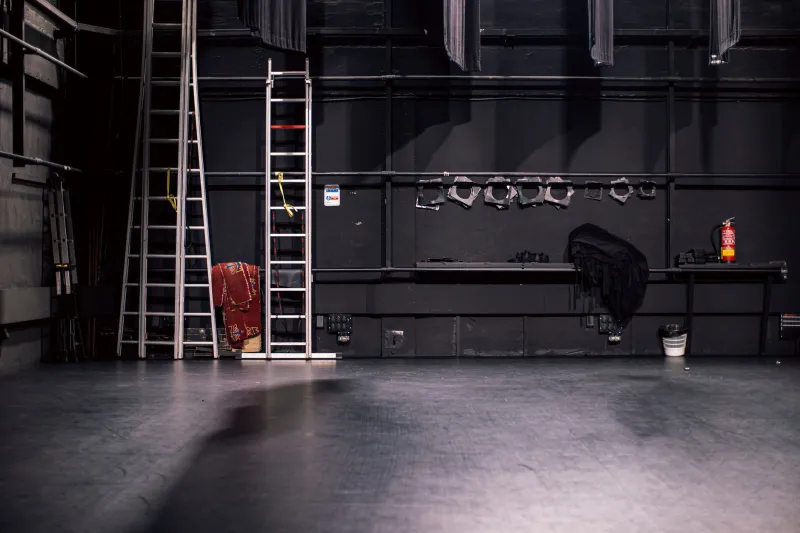
In Hackney’s smaller venues, the prompt corner is rarely a corner. It might be a folding table behind a black wool serge drape, a desk tucked under a lighting rig, or a chair in the wings with a laptop balanced on a flight case. But wherever it is, it is the place where the show’s artistic ambition meets its practical insurance policy. The audience sees a performance. The stage manager sees a system: people, cues, access routes, risks and the clock.
The desk that is really a contingency plan
Ask a stage manager what is in their kit and you get a portrait of the room’s values. At The Yard in Hackney Wick, the prompt corner is built for a flexible space where the seating rake can change between shows. That means the kit includes spare batteries, gaffer tape, a torch, a multi-tool and a laminated evacuation plan that has been walked through with the front-of-house team. At Hackney Showroom, the desk is likely to hold a script, a call sheet, a risk assessment and a latecomer policy that has been agreed with the bar. In a converted pub theatre in Lower Clapton, the prompt corner might also include earplugs, a spare phone charger and a packet of biscuits for the technician who has been in since midday.
The glamorous version of stage management is the cue call. The real version is the checklist. Are the aisles clear? Is the accessible route open? Has the fire door been propped again? Does the compere know that the act before the interval runs long? Is there a plan for the audience member who needs to leave mid-show? Small rooms do not mean small stakes. They mean the stage manager is often the only person holding the schedule, the safety plan and the audience experience in one pair of hands.
Calling the show when everyone is also doing something else
In a large producing house, the prompt corner can feel like mission control. In Hackney, it is more like a switchboard. The lighting designer might also be the technician, the producer might be on the door, and the person who built the set might be the person who knows where the spare gel frames are. The stage manager’s job is to make that improvisation look like a plan.
‘Standby LX, cue twelve. Sound, standby. Go.’ The language is clipped because the room is live. But the craft is in the listening. A good stage manager can hear when a laugh is about to land and when it is about to die. They know that a blackout cue should wait for the punchline, not race it. They know that a scene change in a pub theatre has to happen while the audience is still laughing, because there is no wing space and no spare crew. Calling a show is maybe twenty per cent technical and eighty per cent reading the room.
That is especially true on comedy nights. A compere might go off-script, a heckler might find a microphone, a headliner might decide to do an extra ten minutes. The stage manager is the person quietly negotiating with the clock. They are not there to kill the moment. They are there to make sure the moment has a safe landing.
The latecomer plan is its own piece of theatre
Every venue has one. In a small Hackney room, it is often a whispered choreography between the prompt corner and the front door. If the show has started, the stage manager decides whether to hold, whether to use house lights, or whether to re-seat people at a moment that will not destroy the sightlines. The plan is not about punishment. It is about access. A latecomer is not an inconvenience; they are an audience member who needs a route in.
The same logic applies to the quieter contingencies. A missing prop. A mic that dies. A performer who needs a glass of water. A audience member who needs to leave. The stage manager rehearses these possibilities in the same way an actor rehearses lines. The emergency understudy might be the producer with a script in the bar. The spare torch might be the difference between a graceful blackout and a fire drill. The safety plan is not a folder on a shelf; it is a relationship with the bar staff, the fire warden and the person on the door.
The ten-minute call
At ten minutes, the stage manager walks the room. They check the aisles, the front row, the sightlines, the temperature. They speak to front of house. They return to the prompt corner. They put the script in order, even though it is already in order. They take a breath.
Then the call goes out, and the room starts to fill. The audience sees a show beginning. The stage manager sees a hundred small decisions holding it together. In Hackney’s theatres and comedy rooms, that invisible work is not a supporting detail. It is the architecture of the night.