The Bag by the Door: What Hackney's Covers Carry Before They're Called

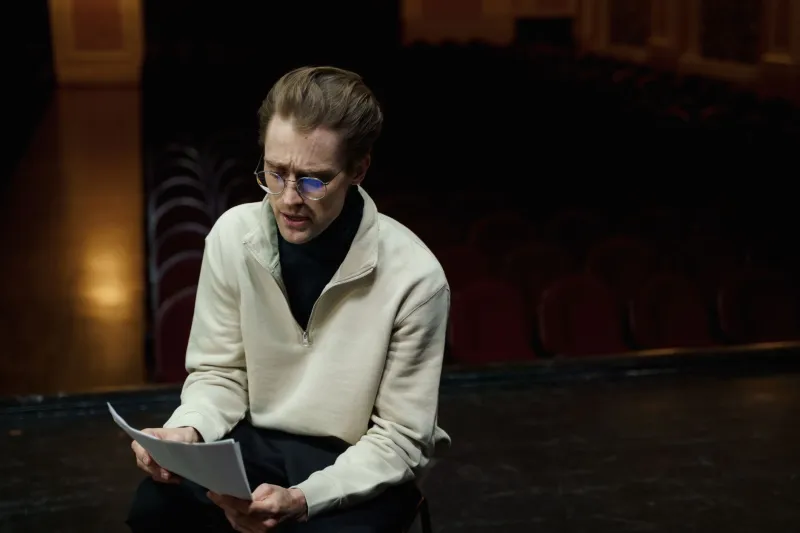
On a wet Thursday in November, Nadia is on the top deck of the 38, mouthing someone else's lines. She is not heading to a matinee. She is a cover in a new-writing show at a 70-seat room off Mare Street, and the actor she covers has a hospital appointment. Nadia has the script on her phone, a pencil in her hair and a bag by her feet containing a hoodie, a phone charger and the kind of flat shoes that can be worn in a kitchen while marking blocking with masking tape. 'You learn a show in the cracks,' she says. 'On the bus, on the walk from Dalston Junction, in the ten minutes before the pub opens.'
The bag by the door
Every cover has one. It is the bag that stays packed, the script that never quite leaves the kitchen table, the pair of shoes that can do a stage mark and a supermarket run. The work is not glamorous. It is the unglamorous labour of being ready for a show you may never perform. In Hackney's smaller theatres and comedy rooms, where budgets are tight and companies are small, covers are often the difference between cancelling a night and keeping the lights on. They are also the people most likely to be forgotten when a venue talks about access, care and fair pay.
Learning a show in fragments
Joel covers two roles in a comedy at a basement venue in Dalston. He has never had a full understudy rehearsal with the whole company. 'We did a put-in on a Tuesday afternoon with half the cast eating crisps,' he says. 'I marked the blocking with tape in my kitchen, then filmed myself doing it badly.' He listens to voice notes of scenes while walking to his day job at a bookshop on Broadway Market. He has a spreadsheet of entrances, props and quick changes. The spreadsheet is not a joke. It is the only way to hold a show together when you are learning it in pieces.
That fragmentation is正常 for covers on the fringe and in pub theatres. A full company might get three weeks. A cover might get three hours, a PDF and a WhatsApp group. They learn lines on the 38, the 55, the Overground. They mark blocking in living rooms, kitchens and the empty auditorium before doors. They rehearse 'on call' — which usually means alone, or with a stage manager who has ten other things to do. It is a skill, and it is work. It just does not look like the work we usually celebrate.
The 38 to Dalston is a rehearsal room
Priya covers a role in a theatre pub show near Hackney Central. She runs lines between stops on the 38, using the bus as a rehearsal room with better lighting and worse acoustics. 'You get very good at mouthing dialogue without looking like a person having a crisis,' she says. 'The tricky bit is the songs. You cannot really sing on the 38. Well, you can, but you become a story.'
Priya also does box office shifts. Her cover fee is a fraction of her weekly rent, and the learning time is unpaid. She does it because she loves the show and because the company is kind. But kindness is not a contract. 'I have been asked to cover with two days' notice and no extra money for the prep,' she says. 'I said yes because I wanted the work. That is not a free choice. That is a small industry with thin margins and a lot of fear.'
On call, off balance
The psychological load is the part nobody budgets for. A cover cannot fully switch off. Every phone buzz could be the call. Every plan — a birthday, a shift, a doctor's appointment — is provisional. Joel describes it as being 'half in the show all the time'. He keeps his phone on loud. He checks the company WhatsApp before bed. He has missed friends' gigs because he needed to stay near a theatre he might not even enter.
That readiness has a cost. Covers talk about anxiety, about feeling like a spare part, about the strange guilt of hoping someone else is unwell enough to need you but well enough to be okay. The culture of 'the show must go on' can push that guilt onto the person least protected. If a venue wants to talk seriously about access, it has to talk about covers. Sick leave, caring responsibilities, chronic illness and mental health all depend on someone being able to step in without the whole building collapsing.
What a cover is actually owed
The asks from the performers I spoke to are not extravagant. They are practical. Time: paid learning time, a scheduled understudy rehearsal, early access to the script, a proper put-in and a named person to ask questions. Pay: a cover retainer or fee that recognises readiness, not just performance; a cancellation fee if a booked cover session is pulled; and sick pay that does not rely on goodwill. Reassurance: clear communication, no guilt trips, and a written agreement about what happens if the call comes.
Venues also owe covers access. That means step-free routes, accessible toilets, hearing loops, childcare-friendly scheduling and an understanding that not everyone can drop everything at 4pm. It means not treating a cover as a favour. It means budgeting for understudies at the start, not begging for them at the end.
Reassurance is a budget line
Small venues in Hackney operate on thin margins. Everyone knows that. But covers are not a luxury extra. They are part of how a show survives a bad week. They are also part of how the sector becomes more inclusive: if you want relaxed performances, diverse casts, parents on stage and performers with health conditions, you need a culture where stepping back is possible. That culture costs money. It also costs honesty.
On the 38, Nadia closes her script as the bus reaches Dalston Junction. She has an hour before the half-hour call. She will walk to the venue, check the props table, and sit in the wings with her bag by the door. The audience will never know her name. That is the point of a good cover. But the industry should know their names, and it should pay for the work that keeps them ready.