The Second Performance: Inside a Hackney Fringe Interval
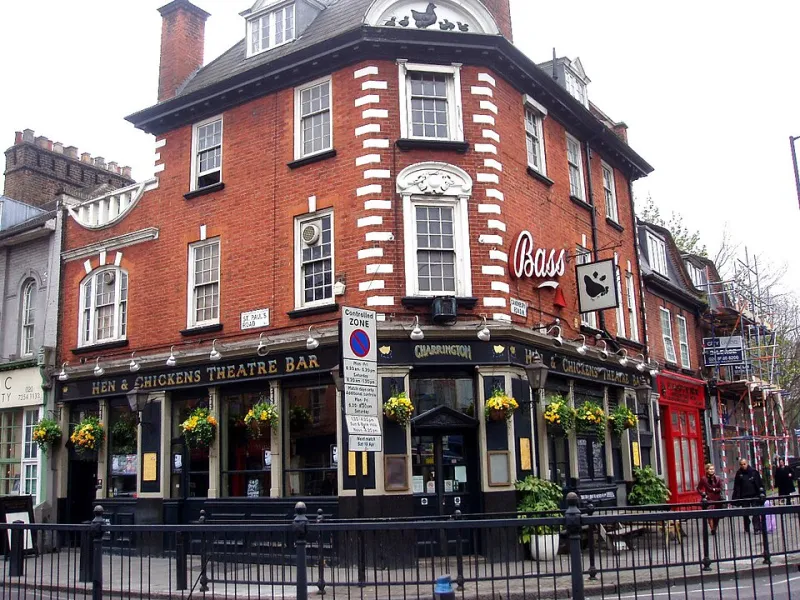
Photo: Ewan Munro from London, UK, CC BY-SA 2.0, via Wikimedia Commons
At 8.47pm the lights come up to half, not full. Nobody in the audience is quite sure whether to clap. In a 90-seat room off Mare Street, the first half has ended on a laugh and a blackout, and the interval has already started backstage. This is the second performance of the night: twenty minutes of queue management, card-reader diplomacy and cold-tub salesmanship that nobody has bought a ticket for.
The first ninety seconds
The house manager calls it “the handbrake turn”. One volunteer swings the trolley out of the storeroom, another unlocks the bar hatch, and a third stands at the foot of the stairs with a card reader held aloft like a torch. The room empties in waves: front row first, then the middle, then the people who need a moment before standing. The crew know the pattern. They also know that the step-free route to the bar must stay clear, which means the merch table gets shifted six inches left and the queue snakes towards the fire exit rather than across it.
There is no anonymous “bar staff” here. The person selling you a £4.50 tub of ice cream might have been tearing tickets an hour ago. The person taking cash might be the same volunteer who helped you find the accessible loo. In small Hackney venues, the interval is not a break from the show. It is the part of the evening where the audience and the building actually meet.
A trolley is a profit-and-loss account on wheels
Look closely at the trolley and you can read the economics of a fringe room. The tubs are bought wholesale, stacked in a chest freezer that hums through the soundcheck. The wine is ordered from a supplier in Dalston. The card reader charges a fee per transaction, which is why the volunteer quietly encourages cash for anything under a fiver — not out of nostalgia, but because 30p here and there adds up over a three-week run.
Nobody is getting rich. The margin on a cold tub might be £1.80. A glass of wine might clear £2.50 after VAT and stock. Out of that comes the card fees, the volunteer expenses, the replacement glassware and the odd emergency taxi for a performer who has missed the last train. The interval takings are not a bonus. They are part of how the room pays its artists and keeps ticket prices below £20.
This is the awkward truth of the small-stage economy in 2026: the work on stage is subsidised by the work at the bar. And the work at the bar is often done by people who are paid in free tickets, experience and the warm glow of keeping a room alive. That model is holding, but only just.
The weak-signal problem
There is a dead spot near the radiator where the card reader gives up. Everyone on the team knows it. The trick is to hold the reader at chest height, ask the customer to tap, and take one step towards the door. “Tap, pray, move left,” as one volunteer puts it.
It is funny until it is not. A queue stalls, a customer sighs, the second-call bell is still ten minutes away. Cash is the backup, but not everyone carries it. The venue keeps a small float and a sign that says CARD AND CASH, because digital exclusion is not a lifestyle choice. For older audiences, for people on tight budgets, for anyone whose bank app has decided to log them out, the cash tin is an access issue dressed up as a contingency plan.
The card reader is also a social object. It forces eye contact. It creates a tiny negotiation: do you want a receipt? Are you paying for the person behind you? Did you know the comedy night has a raffle? The interval is where the venue learns things about its audience — who is celebrating, who is on their own, who needs a quiet corner and who needs to be pointed towards the smoking area.
The social life of twenty minutes
The interval is when a room becomes a crowd. Strangers compare notes on the first half. A couple who came in silent are suddenly talking about the support act. Someone asks the volunteer whether the second half is “more of the same”, and the volunteer gives the diplomatic answer: “It gets bigger.”
For all the talk of short attention spans, people still want the pause. They want to stand up, stretch, argue about the ending they have not seen yet. They want to buy a drink they do not need and hold it like a prop. In a small Hackney venue, the interval is not dead time between the product. It is the bit where the audience becomes a temporary community, with all the awkwardness and generosity that involves.
The crew read the room in real time. If the first half was heavy, they keep the music low. If it was a comedy night and the laughs came easily, they speed up the queue. If someone is upset, a volunteer will find them a seat away from the crush. This is not customer service in the corporate sense. It is hosting.
The second call
At 9.06pm someone rings a small bell, then a louder one. The queue does not vanish; it negotiates. The final tubs go. Glasses are stacked. The stage is reset by a technician who has been waiting for the room to clear. The second half starts three minutes late, which in fringe terms is early.
The audience files back in with the slightly changed energy of people who have shared a queue. The lights go down. The show resumes. Backstage, the trolley is wheeled away, the cash is counted, and someone makes a note to buy more oat milk next time.
Twenty minutes does not sound like much. But it is where the money is made, the audience is met and the room is held together. If small stages are going to survive the next few years, the interval deserves a proper look — not as a pause, but as part of the performance.