Hundred Coats, One Rail: The Wet-Weather Soft Power of a Hackney Cloakroom
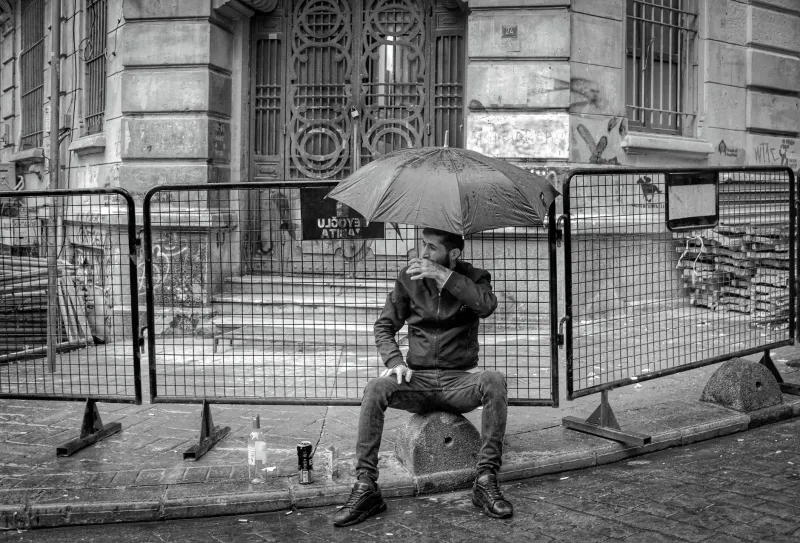
Friday, 18:47, and the rain has found the one seam in Hackney's evening. It comes down in that flat, determined November way, the sort that makes Mare Street look like a rehearsal for a disaster movie. Inside a 180-seat theatre two streets back from the market, the front-of-house team is doing what they always do when the forecast turns: they are clearing space by the rail.
By 19:05, there are sixty-four coats on it. By the interval, a hundred and thirty. By curtain, a hundred and forty-seven, one buggy, a folded blanket and a tote bag containing what appears to be a leek. The queue is not really a queue. It is a negotiation with weather.
The rail as a weather map
You can read a Hackney audience by their outerwear. A dry trench coat means someone came by bus and timed it perfectly. A soggy puffer jacket means a walk from Hackney Central with the wind against them. A child's anorak, hood still dripping, means a family who decided at 6pm that yes, they were going to make it after all.
Nia runs front of house. She has been doing this long enough to treat the cloakroom as a kind of instrument. 'You can set your watch by the first wet Barbour,' she says. 'Then the rain gets serious and the rail fills up in waves. It's like the tide coming in.'
The cloakroom here is not a grand affair. It is a strip of rail no longer than a bus shelter, two hooks, a stack of numbered tags and a plastic tray for umbrellas that has been labelled, in marker pen, 'the orphanage'. But on a wet Friday it becomes the second-most-visited part of the building after the bar. And unlike the bar, nobody writes a review about it unless it goes wrong.
Tags, hooks and the two-minute rule
Tomas is on the rail tonight. He has a system: take the coat, tag it, hang it, hand back the ticket, all in one movement. He calls it the wet-wool handover. 'You're not storing a coat,' he says. 'You're buying someone ninety seconds of not thinking about the weather. That's the job.'
The tags are doubled: one on the hanger, one on the coat. It is a small redundancy that saves an enormous amount of time when the interval rush arrives. Umbrellas get a tag too, though they are harder to identify and far more likely to be claimed by the wrong person. The team has learned to ask for descriptions rather than accusations. 'Can you tell me what colour the handle is?' works better than 'Is this yours?' every single time.
There is a two-minute rule in the cloakroom. Anything that takes longer than two minutes to resolve gets moved to the side, so the queue keeps moving. The side table is where the complicated coats go: the ones with broken zips, the ones attached to buggies, the one that turns out to belong to a performer who is already late for a tech check.
The lost property economy
By 22:10, the rail is thinning out but the umbrella orphanage is full. Twenty-three umbrellas, three scarves, a single glove and a hat that nobody will admit to owning. The venue holds lost property for four weeks, then donates what remains to a winter coat drive run by a church hall off Dalston Lane. It is not a glamorous policy, but it is a useful one.
There is a quiet diplomacy to a wet night. People are tired, damp and protective of their things. A missing coat can feel like a crisis. The staff have a script for it: listen, ask for the tag number, check the rail, check the side table, check the back room. Ninety per cent of the time the coat is exactly where it should be. The other ten per cent is where the soft skills come in.
'You get good at reading the panic,' says Nia. 'Someone who has lost a coat is not usually angry at you. They're angry at the rain. You just have to be the person who helps them get dry.'
Soft power in a damp coat
The cloakroom is not the main event. It is not the play, the punchline or the standing ovation. But it is the first and last thing a lot of people touch in the building. It is the place where a night out gets a little easier, where a wet coat stops being a problem and becomes someone else's responsibility for two hours.
And it is labour. Real labour, done by real people, on a rota, often for not very much money. The venue moved cloakroom staff onto the same pay band as the bar team in 2023, which sounds like a small thing until you realise how many places still treat coat-check as pocket money for someone's mate. It is not pocket money. It is a frontline service on a wet November night.
At 22:40, the last coat leaves the rail. It is a damp denim jacket, ticket 118. The owner is still at the bar, talking to someone about the second act. Tomas hangs it on the end hook and goes to help stack chairs. By 23:10, the rail is a skeleton again: empty hangers, one forgotten scarf, a faint smell of wet wool and the promise of tomorrow's weather.
The next morning, someone will come back for an umbrella. It will be there. That is the whole point.