Cold Comfort: The Fridge Diplomacy of Hackney's Backstage Rooms
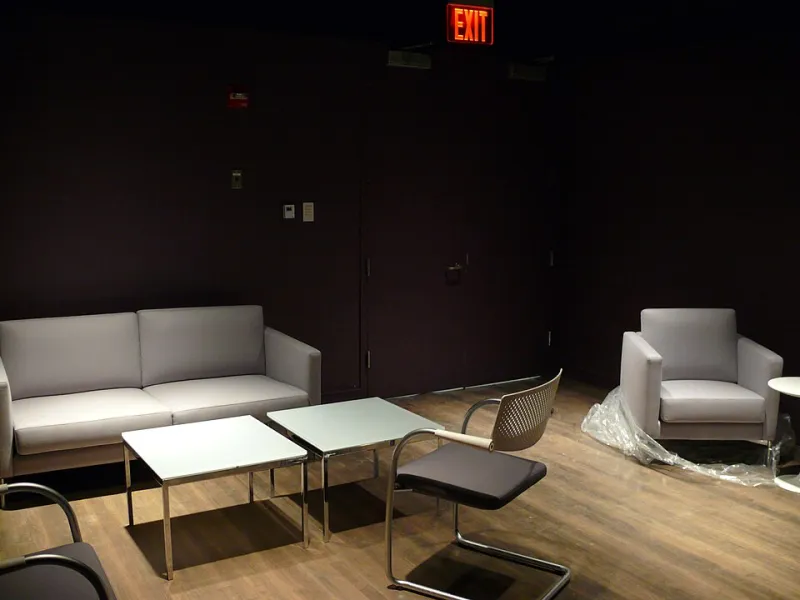
Photo: JohnRH4, CC BY-SA 2.0, via Wikimedia Commons
The show is over, the bar has called last orders, and the green room has that particular smell: warm dust, citrus cleaner, someone's crisps. In the corner, the fridge is still working. It is the least glamorous object backstage and possibly the most honest. Ask a performer what a venue is like and they might mention the lighting desk or the audience. Ask them again after a two-show day and they will tell you about the fridge.
In 2026, with fringe budgets tighter than ever and more people rehearsing around day jobs, that little cold box has become a quiet test of values. What gets stocked? Who gets to take the last yoghurt? And why does one venue's milk have a name, a date and a small drawing of a cat on it while another's looks like a science experiment?
The shelf audit
Start with the top shelf. In a 60-seat room off Mare Street, it holds the promoter's oat milk, a carton of semi-skimmed with 'TECH' written in marker, and a jar of jalapeños that has outlived two artistic directors. The middle shelf is a graveyard of good intentions: half a cucumber, a tub of something grain-based, three cans of own-brand cola. The door is where the chaos lives — hot sauce, a birthday Prosecco, somebody's lactose-free spread, and a tiny bottle of tonic that nobody will ever claim.
The freezer is its own economy. Peas for a sprain, ice for a drink, and a bag of oven chips that belongs to a comedian who swears she will cook them after the late show. She never does. The chips become folklore.
What sits on those shelves tells you who the room is built for. A venue that provides gluten-free biscuits and a dairy alternative as standard is saying something. A venue that offers only UHT sachets and a lonely apple is saying something else. It is not about luxury. It is about whether care is baked into the budget or left to the kindness of whoever happened to pass a Co-op on the way in.
Who labels the milk?
The labelling question divides Hackney's backstage rooms more reliably than any artistic policy. There are the Name and Date people, usually stage managers, who bring order with a Sharpie and a roll of masking tape. There are the Community Milk people, who buy a big carton and declare it for all, only to watch it vanish by 4pm. And there are the Free-Range Foragers, who believe an unlabelled item is a gift from the universe.
'You can tell a lot about a company from how they handle a pint of milk,' says a technician who has worked across comedy and theatre rooms in Dalston and Homerton. 'If someone writes their name on it, fair enough. If someone writes 'PLEASE HELP YOURSELF' and means it, that's a good room. If someone hides a cheese twist at the back of the freezer, that's a room that has been burned before.'
Promoters have their own rituals. A weekly new-material night near London Fields keeps a 'house shelf' stocked with basics: tea, coffee, long-life milk, a pack of biscuits. Performers can add to it, but they don't have to. The promoter calls it 'removing one small money worry from the night.' It costs less than a decent microphone cable and it changes the temperature of the room.
The borrowed economy
Backstage theft is rarely grand. It is a slug of someone's oat milk, a slice of the birthday cake left on the counter, a spoon that disappears into the fog of get-out. The bigger issue is the unspoken debt: the person who always brings snacks and the person who always eats them. In a small scene, that imbalance gets noticed.
The comedy cellars have their own code. Bring something to share if you can. Don't finish the communal milk on a Saturday. If you take the last tea bag, put it on the list. The list is usually a scrap of paper taped to a cupboard, and it is more effective than most management systems. It works because everyone can see it.
Leftovers as a values statement
Here is where the fridge gets political. A green room is a workplace, even when it is also a social club. Performers arrive with allergies, religious diets, medication, fatigue and a need to eat something that isn't a bag of crisps at 10pm. The fridge that has a clearly labelled vegan shelf, a dairy-free milk option and a nut-free corner is not being precious. It is being professional.
Venues in Hackney are getting better at this, partly because performers are asking. A studio near Hackney Wick now keeps a small allergen note on the fridge door and asks visiting companies to add their own. It is a low-tech solution — paper, pen, honesty — and it prevents the sort of backstage incident that everyone remembers for the wrong reasons.
A short, completely unofficial etiquette guide
- Label your own milk. If you are feeling generous, label it 'help yourself' and mean it.
- Do not finish the community carton before the interval. That is a rookie move.
- If you bring a snack for the company, say so out loud. Telepathy is not a dietary requirement.
- Keep nuts and other common allergens sealed and flagged. It is not admin, it is access.
- Clean up before the get-out. The fridge is not a time capsule.
- If you borrow a spoon, return it. If you borrow someone's houmous, confess.
- On closing night, share the Prosecco. Someone always brings one and someone always forgets.
What the fridge asks of a room
The green-room fridge will never make it into a press release. It is not a headline. But it is one of the places where a venue's politics become practical. A cold shelf of labelled milk can say: we expected you, we thought about you, and we have left something here for the person who comes after you.
So next time you are backstage in Hackney, listen for the hum. It is not just a fridge keeping things cold. It is a small, stubborn argument for generosity in a city that makes generosity expensive. And if you find a bag of oven chips in the freezer, leave them alone. They belong to a comedian. She is coming back. Probably.