Four Forty-Seven: The Phone Call That Keeps Hackney's Fringe Curtain Up
It is 4:47 on a Thursday when Priya's phone lights up with a name she half-expects and wholly dreads. The actor playing the lead in a 60-seat studio show off Mare Street has lost their voice. Doors are in three hours. Priya is the stage manager, which in a Hackney fringe venue usually means she is also the scheduler, the diplomat, the keeper of the track file and the person who knows which radiator makes a noise during the second monologue.
The show must go on. But in small rooms, that phrase is not a slogan. It is a rota, a WhatsApp group, a spare script in a tote bag and a performer already on the 38 bus with half a track in their head.
The afternoon phone call
Big theatres have understudy departments, cover runs and rehearsal schedules printed months in advance. Hackney's smaller stages have something messier: a swing who knows two roles, a stage manager with a spreadsheet and a landline that nobody answers after 6pm. The call is rarely dramatic. It is practical. Can you get here for 7? Have you got the script? Do you know the bit with the chair?
'You are not asking someone to be brilliant,' says Joel, a swing who has covered four roles across two Hackney venues this year. 'You are asking them to be safe, audible and roughly in the right place. The brilliance can come later, once the audience is in and nobody is standing on a cable.'
That distinction matters. A cover is not a clone. They are not there to imitate the original performer's every eyebrow. They are there to keep the story upright, the cues connected and the box office from issuing 60 refunds on a wet Tuesday.
The walk-through that is not a rehearsal
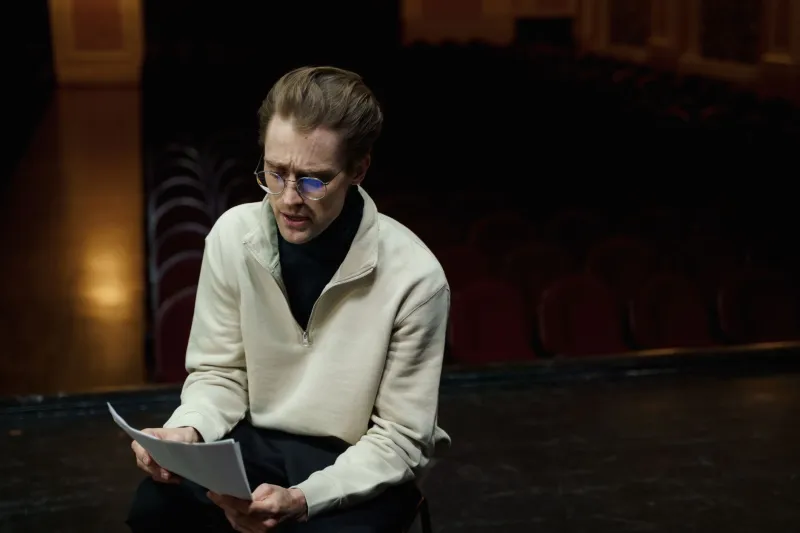
At 5:30, the room is still being swept. The cover arrives with a bag over one shoulder and a coffee they will forget. The stage manager walks them through the geography of someone else's night: enter here, don't touch that radiator, the door sticks, the light cue is on the word 'kitchen', the fake blood is actually ribena and it stains.
In comedy rooms, the cover might be learning a running order, a raffle patter, a heckle protocol and the name of the venue's regular sound engineer. In theatre, they might be learning three scenes, two quick changes and one bit of blocking that only makes sense if you know the original actor has a bad knee. Nobody calls this a rehearsal. It is a walk-through, a line run, a 'let's just make sure you don't fall off the edge'.
'You learn the show in the gaps,' says Tasha, a performer who has covered everything from a two-hander in Dalston to a late-night comedy bill in London Fields. 'You learn it on the bus, in the wings, in the ten minutes when the audience is buying a drink. It is not ideal. But it is real, and it is why the room stays open.'
Why the audience rarely notices
Covers are trained to absorb energy rather than impersonate. They watch the original performer's rhythm, then find their own way to land the joke or hold the pause. In a small room, the audience is close enough to see a different face, but they are also close enough to feel whether the show is being held together with care. Most of the time, they do not clock the swap. They clock the story.
That is the strange magic of the third stage: not the rehearsal room, not the opening night, but the in-between space where a performer learns a role in an afternoon and then does it in front of paying strangers. It is somebody's first night, and nobody in the audience knows. The bar staff might know. The lighting operator definitely knows. The stage manager is already thinking about tomorrow's phone call.
The labour behind the resilience
There is a progressive case for making this machinery visible, and it is not about spoiling the magic. It is about paying covers properly, sharing track files, building in paid standby shifts and not treating goodwill as a substitute for a rota. In 2026, with fringe budgets still tight and rents still ridiculous, resilience is not a personality trait. It is a schedule.
So the next time a Hackney show runs smoothly on a night when it should have fallen apart, look for the person in the wings with a script folded into their back pocket. The curtain went up. The phone went silent. The audience went home happy, never knowing they had just watched someone's first night.
That is the third stage. It is the hardest one. And it is the reason the lights stay on.