Between Shifts and Spotlights: Three Hackney Performers on Rehearsing After the 9-to-5
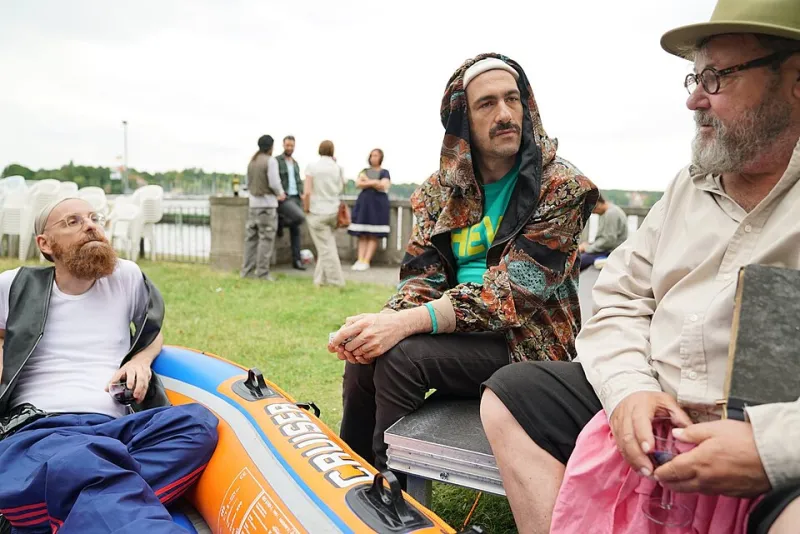
Photo: Kay Sievers (קאי זיברס), CC0, via Wikimedia Commons
It is 6.47pm on a Tuesday and Maya is changing out of her work clothes in the accessible loo of a Hackney rehearsal studio. She has come straight from her job as a hospital administrator at Homerton, and she has twelve minutes before the rest of the cast arrives. Her costume is in a tote bag. Her script is on her phone. Her dinner is a flapjack from the café downstairs.
This is the real backstage of Hackney performing arts in 2026: not the opening-night party, but the rushed change, the shared studio, the friend who lets you leave a bag behind the bar. Three performers agreed to let Stage 3 Hackney follow their after-work grind. Their stories are different, but the shape is the same. The day job pays the rent. The evening rehearsal pays back something else.
Maya, 34: actor and hospital administrator
Maya has been acting since she was a teenager, but she has never had a year without a day job. Right now she works four days a week in NHS administration and rehearses three evenings a week for a short run at a Dalston studio theatre. She gets the 38 bus from Homerton to Dalston, eats something on the way, and tries to leave her work head at the door.
' The hardest part is not the tiredness,' she says. 'It's the transition. At work I am answering emails about staffing rotas. At rehearsal I have to be a person who can cry on cue. Sometimes I need ten minutes just to become a different human.'
Her company rehearses in a shared room above a pub. The space is cheap because it is also used for yoga, meetings and a weekly life-drawing class. The mirrors are scratched. The heating is unpredictable. Nobody minds. What they mind is the cost of everything else: the travel, the printing, the props, the unpaid previews. Maya keeps a spreadsheet. She is not alone.
Jordan, 28: comedian and bike courier
Jordan delivers food across Dalston, London Fields and Mare Street. He writes jokes in the notes app while waiting for orders. He rehearses new material on the bike, muttering to himself at traffic lights. By the time he gets to a gig, he has already done a full shift and a mental soundcheck.
' The bike is the office,' he says. 'You learn to use the dead time. I have twenty minutes between drops? That's not a break, that's a writing session. The problem is that by 9pm my legs are done and my brain is still going.'
He performs at small rooms in Hackney and sometimes further afield. He is not chasing a Netflix special. He is chasing a tight five minutes that works when he is knackered, which is the only condition he ever performs in. The day job gives him material, but he is careful not to turn every set into a complaint about customers. 'Nobody wants to hear a courier moan for ten minutes,' he says. 'They want to hear what is funny about it.'
Priya, 41: actor and teaching assistant
Priya works at a primary school in Clapton. She rehearses two evenings a week and performs in short runs at venues across Hackney. She has a child, a partner who works shifts, and a calendar that looks like a tube map after a signal failure. Childcare is the thing that decides whether she can say yes to a role.
' I have turned down work because the rehearsal schedule was designed for someone with no caring responsibilities,' she says. 'That is not a sob story. It is just the reality. If a company wants access to actors like me, they need to think about rehearsal times, previews and whether the fee actually covers childcare.'
She learns lines on the bus and in the school playground. She has a favourite café in Stoke Newington where the staff let her sit with a script for an hour if she buys a coffee. She says the quiet support of local places matters more than people realise. 'You need somewhere to land between work and rehearsal. A café that doesn't rush you is part of the infrastructure.'
The quiet infrastructure of making it work
Hackney is full of these small arrangements. Shared studios in church halls. Pub back rooms. Cafés that turn a blind eye to a laptop and a highlighter. Venues that let performers leave a bag behind the bar. Friends who swap childcare. Employers who agree to flexible hours. None of it is glamorous, and none of it is guaranteed.
The performers I spoke to were clear about what would help. Affordable rehearsal space that is bookable by the hour, not the week. Paid previews. Auditions that do not assume everyone can take a weekday afternoon off. Better communication about access needs. And a recognition that the day job is not a failure or a phase. It is a subsidy that keeps the sector running.
What it costs, and what it gives
Maya gets home around 10.30pm and marks up her script for the next day. Jordan checks his bike lights and sets an alarm for another shift. Priya answers a message from her partner about the school run and falls asleep with a script on her chest. They are tired. They are also working.
The day-job diaries are not a story about grit in the abstract. They are about time, money and the quiet generosity of a borough that still has rooms to rehearse in. If Hackney wants to keep its performing arts ecology alive, it needs more than black boxes and opening nights. It needs predictable shifts, affordable studios, paid work and a bit of understanding from everyone who benefits from the culture on their doorstep.