The First Show Is at the Window: A Week of Small Miracles at a Hackney Box Office
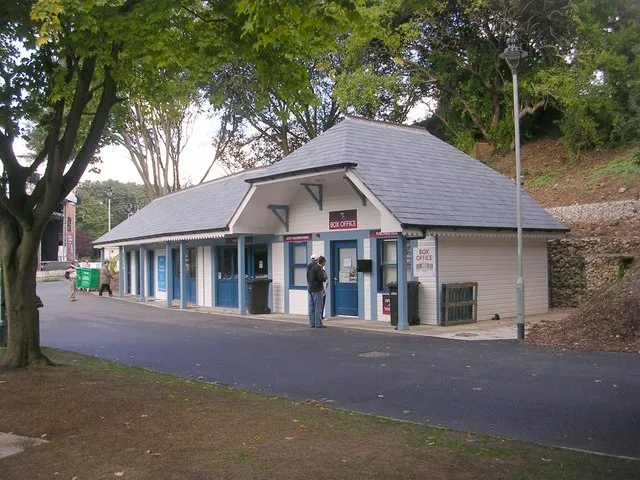
Photo: Betty Longbottom , CC BY-SA 2.0, via Wikimedia Commons
Monday: the highlighter is a tool of dramaturgy
The box office window is a small hatch in a wall that used to be a shop. It has a counter, a card reader, a phone that rings twice before voicemail, and a mug that says 'World's Okayest Duty Manager'. Behind it: a laptop, a seating plan, a stack of blank access forms, and a highlighter. The highlighter is the most important thing on the desk. It is how we mark the aisle seats. It is how we mark the seats that are held. It is how we mark the difference between 'sold out' and 'sold out but maybe'.
Monday is quiet. A woman comes in to ask if the Thursday show is suitable for her dad, who is 84 and hard of hearing. We talk about the loop, the aisle seat, the bar noise, the fact that the second half is louder than the first. She buys two tickets. She says thank you three times. This is the job: not selling tickets, but removing the small fears that stop people buying them.
At 4pm a man calls to say he has lost his ticket. He has the confirmation email, but his phone is broken. He is clearly embarrassed. I tell him it happens every week. I put a note on the door list: 'David — lost ticket — bring ID.' He arrives at 7.20pm with a printout of the email and a library card. We let him in. He says, 'I thought you'd think I was a chancer.' I say, 'We save that for people who ask for a refund after the interval.'
Tuesday: the seat swap
A woman arrives with a knee brace and a ticket in row F. Row F is up a step. She did not know. She is not angry, just tired. I look at the seating plan. There are two returns in row B, aisle. I highlight them. I cross out row F. I write 'SWAP' in capitals. She says, 'Are you sure?' I am sure. This is the whole job: making the room fit the person, not the person fit the room.
The show starts. I stand at the back with the highlighter and a radio. The first performance of the night is not the play. It is the moment someone realises they can stay. It is the moment the room says yes.
At the interval, a man asks if he can move because the person next to him is eating crisps 'in surround sound'. I move him to a spare seat in the circle. He is delighted. The crisp-eater never knows. This is diplomacy. This is also the reason the highlighter runs out by Wednesday.
Wednesday: the wrong night
A couple arrive with tickets for Thursday. They are certain it is Wednesday. They have booked a babysitter. They are already apologising. I check the system. Thursday is sold out. Wednesday has two seats together in the back row. They take them. The show is 20 minutes in. We sneak them in during a blackout. The woman whispers 'thank you' as she sits. The man gives me a thumbs-up. It is the most dramatic thing that will happen all week.
Later, a teenager comes to the window alone. They bought a ticket with a friend, but the friend has bailed. They want to know if they can sit somewhere else. They are 16 and look 13. I ask if they are okay. They say yes. I give them a seat by the aisle and tell them where the exit is. I tell them the bar does squash. They smile. This is not a small thing. A box office is sometimes the first adult who believes a young person can be in a room on their own.
Thursday: the accessibility request
An email arrives at 11am: a wheelchair user has booked a ticket but the accessible space is not showing as available online. The website is wrong. It happens. I call the venue manager. We move a chair. We check the ramp. We check the loo. We check the door width. We call the customer back. She says, 'I'm used to chasing.' I say, 'You shouldn't have to.'
This is the part of the job that never makes the brochure. Access is not a favour. It is the baseline. If the window cannot answer an access question, the window is broken. We keep a folder behind the desk: step-free routes, quiet spaces, BSL dates, relaxed performances, the name of the person who knows where the hearing loop battery lives. The folder is dog-eared. That is how you know it is used.
Friday: the last-minute miracle
Friday is chaos in a good coat. The show is sold out. There are six people on the waiting list. There are two returns. There is a person who wants to buy a ticket for their ex-partner as a surprise. There is a person who has bought a ticket for the wrong venue. There is a person who has bought a ticket for the right venue but the wrong night, again.
At 7.15pm a woman comes to the window and says, 'I know this is a long shot.' I love a long shot. She has come from Leeds. She did not book. She has a bag and a look. There is one house seat. It is not for sale. But the director is not coming. I make a call. The seat is released. She pays. She cries a little. I pretend not to notice. The highlighter comes out. The seat is marked. The show goes on.
Saturday: the front porch
The window is the venue's front porch. People arrive early to ask where the loo is. They arrive late to ask if they can still come in. They arrive with questions they cannot ask anywhere else: 'Is the show funny?', 'Is it sad?', 'Will I understand it?', 'Is there a bar?', 'Is there a cloakroom?', 'Can I bring my mum?'
We answer all of them. We are not gatekeepers. We are ushers with a database. We are the first show of the night. We are the highlighter and the phone call and the seat swap. We are the small miracle that gets someone through the door.
At 10.30pm on Saturday, the window closes. The highlighter is dry. The phone rings once and stops. The last audience member leaves with a coat and a programme. I count the cash, check the door list, and write a note for Monday: 'Buy more highlighters.'